
Building an atomic design system
Building a customised design system to work for multiple teams
Project Overview
The teams lacked a tailored design system, to unify the organization’s look-and-feel, brand and optimize efficiency. The out-of-the-box solutions they had previously tried didn’t fully meet their needs, leading to an inconsistent design, no reusability and slower development process.
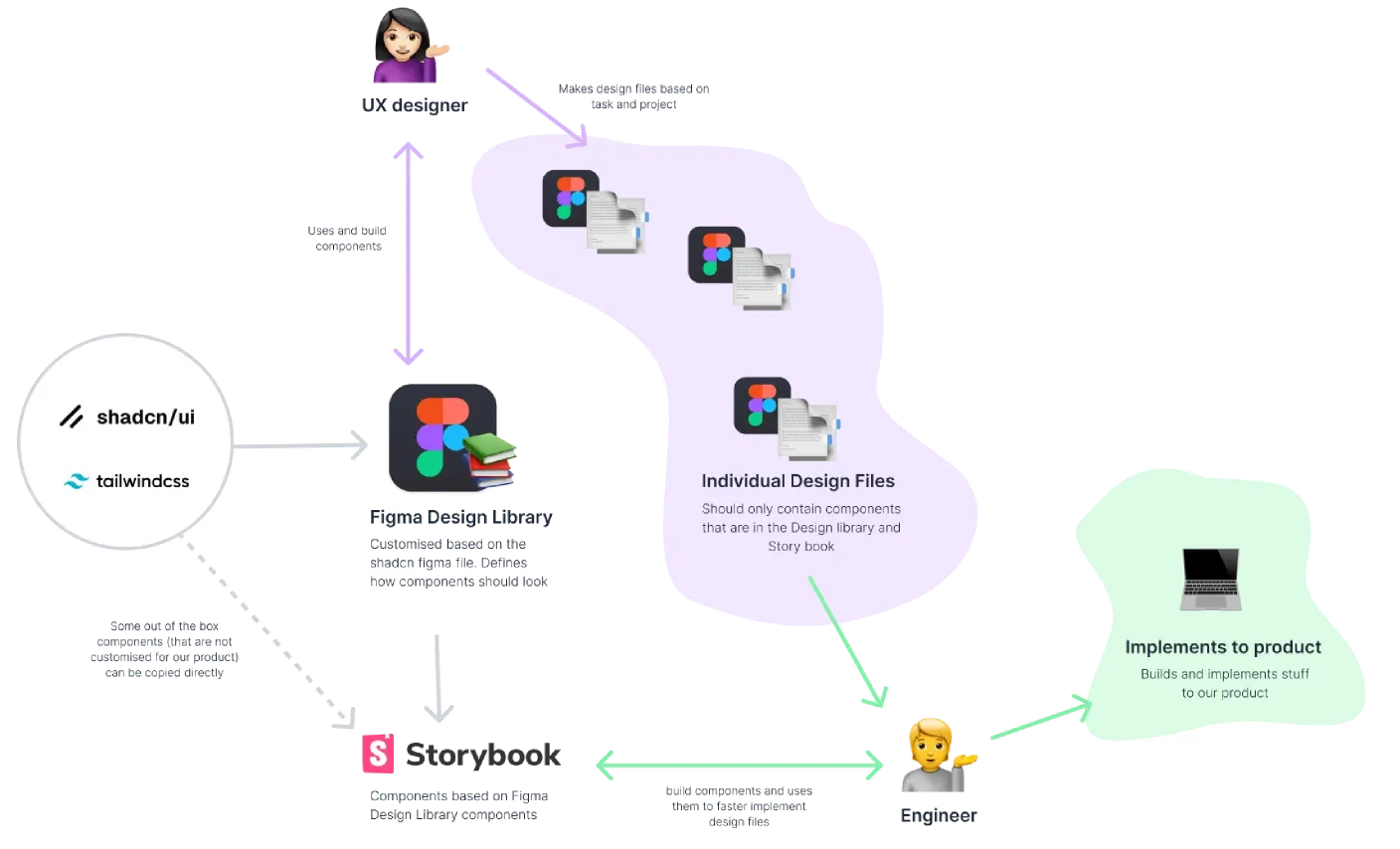
What was done: Designed and rebuilt a more scalable and flexible design system, based on the Atomic Design principles and with foundations and inspiration from Tailwind, Shadcn and Ant Design.
Key Features
Atomic design approach: By using this approach it made it easier to create components that could be nested within other components, providing greater modularity.
Improving UI components: Creating a shared library, using variables to make components more consistent as well as more flexible and accessible. Themes and naming conventions for variables Figma that allowed us to easily toggle between light and dark mode with just a few clicks. By creating multi-dimensional, flexible components we could effortlessly customize size, layout, and styling without having to update everything manually.
Consistent iconography and typography: across the whole platform
Storybook integration: Defined detailed behavior and interaction patterns using Storybook which increased the ease of use for engineers
Keyboard navigation: Since many of the users were used to using keyboard for navigating spreadsheet, we made components support keyboard interaction as well (e.g. copying and pasting a cell's content).
Specs
- Domain:
- Video Gaming
- Category:
- Design System
Challenges & Solutions
# Challenge: Huge platform built by developers.
Different technologies, and random choice of ui-components, and weird user flows made the internal tools hard to navigate for non-developers, with limited focus on design.
# Solution: One design system to rule them all
Create a design system based on one of the most popular one (Tailwind) and customise it the teams needs. By using the atomic design principle together with Storybook-integration, even if we had a large amount of components, we were able to build it in a way so that if we changed a variable one place, it would be updated everywhere (no more manual work!).